
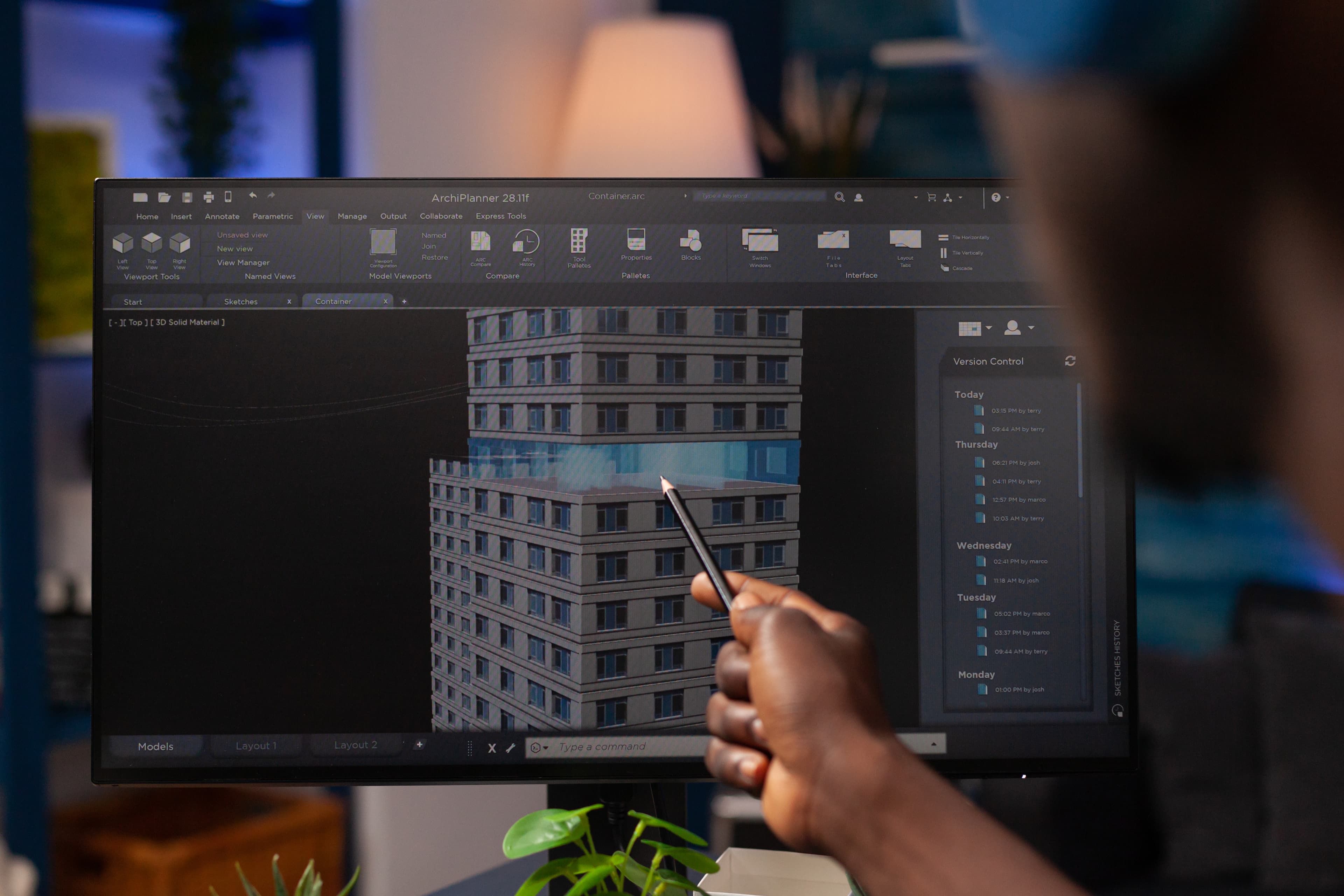
BIM + Generative AI: The Next Phase of Design Automation in AEC
the convergence of two revolutionary technologies the architecture, engineering, and construction (aec) industry stands at a pivotal transformation point where...
الكاتب
BimEx Team
BIM Research Editor
تاريخ النشر
26 مايو 2026
26 مايو 2026
The Convergence of Two Revolutionary Technologies
The architecture, engineering, and construction (AEC) industry stands at a pivotal transformation point where two powerful technologies are converging to reshape how buildings are designed, planned, and constructed. Building Information Modeling (BIM) has already revolutionized the industry over the past two decades, creating intelligent 3D models that serve as the single source of truth throughout a building's lifecycle. Now, generative artificial intelligence is poised to amplify BIM's capabilities in ways that were previously unimaginable, enabling architects and engineers to explore thousands of design variations in minutes rather than weeks, automate complex compliance checking, and optimize buildings for performance, cost, and sustainability with unprecedented precision.
This convergence represents more than a simple technological upgrade—it signals a fundamental shift in how design professionals approach problem-solving. Traditional CAD workflows required designers to manually model each iteration, a time-consuming process that limited exploration and often resulted in suboptimal solutions. Generative AI changes this paradigm by treating design as an optimization problem, where algorithms can rapidly generate and evaluate thousands of alternatives while respecting hundreds of constraints simultaneously. When combined with the rich data environment of BIM, these AI-powered tools can make decisions that consider structural integrity, energy performance, constructability, cost implications, and occupant comfort all at once.
Understanding the Current BIM Landscape
Before exploring how generative AI enhances BIM, it's essential to understand the maturity level of BIM implementation across the industry. Most large-scale construction projects today utilize BIM at some level, whether for basic 3D visualization, clash detection, or comprehensive asset management. However, the vast majority of BIM implementations remain primarily document-centric, treating the 3D model as a sophisticated drawing replacement rather than a data-rich information repository. This represents a significant untapped opportunity, as the true power of BIM lies not in the 3D geometry itself but in the associated data—material specifications, performance characteristics, maintenance schedules, and relationships between building components.
The challenge facing the industry is that extracting maximum value from BIM requires specialized expertise and significant time investment. Creating detailed BIM content, maintaining data quality, and performing sophisticated analysis all require skilled professionals who remain in short supply. This is precisely where generative AI enters the equation, offering the potential to automate many routine BIM tasks while enabling new forms of analysis and optimization that were previously impractical. The technology doesn't replace BIM professionals; rather, it amplifies their capabilities and frees them to focus on higher-value creative and strategic work.
How Generative AI Transforms BIM Workflows
Generative AI encompasses a range of machine learning techniques that can create new content—designs, text, images, or other outputs—based on training data and defined parameters. In the context of BIM and architecture, this technology manifests in several powerful applications that are already beginning to transform practice. The most immediate impact comes from AI's ability to understand and manipulate BIM data in natural language, allowing designers to describe what they want and receive generated model content in return. Imagine telling an AI system, "Create a sustainable office building design for a urban site with floor-to-ceiling glass, natural ventilation, and LEED Platinum certification target," and receiving a complete conceptual BIM model with preliminary structural framing, curtain wall systems, and energy analysis results.
Beyond simple content generation, generative AI enables sophisticated design optimization that considers multiple competing objectives simultaneously. A building design must balance structural efficiency, energy performance, daylighting, views, construction cost, and numerous other factors that often conflict with each other. Traditional optimization approaches require designers to manually explore tradeoffs, a process that is both time-consuming and limited by human cognitive capacity. Generative algorithms can explore vast design spaces, using techniques like genetic algorithms, particle swarm optimization, or reinforcement learning to identify solutions that maximize overall performance across all relevant metrics. When connected to BIM models, these optimizations produce tangible, buildable designs rather than abstract solutions.
Practical Applications in Today's AEC Industry
The practical applications of combining BIM with generative AI span the entire project lifecycle, from early concept design through construction documentation and facility management. During the schematic design phase, generative tools can rapidly produce multiple massing studies that respond to site constraints, zoning requirements, and program needs, allowing clients to visualize alternatives and make informed decisions about building form and orientation. These studies aren't just aesthetic exercises—they include preliminary structural systems, energy models, and cost estimates generated directly from the BIM data, providing owners with realistic information for project feasibility assessment.
Code compliance represents another area where AI-enhanced BIM delivers immediate value. Building codes are notoriously complex, with requirements that vary by jurisdiction and often depend on specific conditions within the model. Manual code review is time-intensive and prone to errors, particularly on complex projects. AI-powered compliance checking can automatically scan BIM models against applicable codes, identifying potential violations during design development rather than during construction documentation when corrections are expensive. These systems can check everything from egress path widths and fire separation distances to accessibility requirements and structural load capacities, dramatically reducing the risk of costly code-related change orders.
Energy analysis and sustainability optimization benefit enormously from generative AI integration. Buildings account for a significant portion of global energy consumption and carbon emissions, making energy efficiency a critical design consideration. Traditional energy modeling requires specialized expertise and must be performed iteratively as design evolves, often resulting in analysis that occurs too late to meaningfully influence major design decisions. Generative AI can continuously optimize building orientation, envelope specifications, window-to-wall ratios, shading devices, and HVAC systems to minimize energy consumption while maintaining occupant comfort, all within the BIM environment where this information is naturally stored.
Current Tools and Emerging Platforms
The market for AI-enhanced BIM tools is rapidly evolving, with both established software vendors and innovative startups introducing new capabilities. Autodesk, the dominant player in BIM software, has begun integrating machine learning features across its platform, including automated generative design capabilities in Revit and flow-based design exploration in FormIt. Bentley Systems has similarly been incorporating AI for infrastructure optimization, while newer entrants like Spacemaker (acquired by Autodesk) and Testfit focus specifically on generative site planning and building arrangement optimization.
Beyond design tools, specialized AI platforms are emerging that connect with BIM data from multiple sources. These platforms can aggregate information across projects, identify patterns and anomalies, and provide predictive insights for cost estimation, scheduling, and risk management. The integration typically works through open BIM standards like IFC (Industry Foundation Classes), allowing AI tools to read and write BIM data regardless of the originating software, though data interoperability remains an ongoing challenge that affects the reliability of cross-platform workflows.
Challenges and Considerations for Adoption
Despite the tremendous potential, significant challenges must be addressed before generative AI becomes mainstream in AEC practice. Data quality and availability represent the most fundamental barrier—AI systems are only as good as the data they train on, and the AEC industry has historically struggled with inconsistent data standards, incomplete models, and limited high-quality training datasets. Many existing BIM models were created primarily for visualization rather than analysis, lacking the detailed attributes and parameters that AI systems need to generate meaningful outputs. Addressing this requires industry-wide commitment to better data practices and potentially new standards specifically designed for AI consumption.
Professional liability and regulatory acceptance present additional hurdles. When an AI system generates a design recommendation, who bears responsibility if that design fails? Current building codes and professional licensing frameworks were not designed with AI-generated content in mind, and the legal landscape remains uncertain. Similarly, many clients and jurisdictions require stamped drawings from licensed professionals, creating a bottleneck where AI-generated content must be reviewed and re-produced by humans anyway, potentially negating efficiency gains. These issues will require resolution through a combination of updated regulations, professional standards, and industry best practices.
The Future: What Lies Ahead for AI-Enhanced BIM
Looking forward, the trajectory is clear: generative AI will become increasingly integrated with BIM workflows over the coming decade. The technology is advancing rapidly, with new capabilities emerging monthly and major investments from both established software vendors and well-funded startups. We can expect to see AI systems that not only generate designs but also learn from project outcomes, continuously improving their recommendations based on actual building performance data. This feedback loop—where BIM models created during design are compared to operational data after construction—will enable a new level of evidence-based design that has been promised but never fully realized.
The nature of architectural and engineering practice will inevitably evolve as these tools mature. Rather than spending hours manually modeling building components, design professionals will increasingly act as curators and evaluators of AI-generated alternatives, applying their expertise to select and refine solutions that meet project goals. This represents not a diminishment of professional value but rather an elevation—shifting human contribution from mechanical production to creative synthesis and judgment. Firms that embrace this transformation while investing in the data infrastructure and workforce skills needed to support it will be best positioned to thrive in the coming years.
Conclusion
The convergence of BIM and generative AI represents a watershed moment for the AEC industry. These technologies are not competing with human creativity—they are amplifying it, enabling designers to explore solutions that would be impossible to discover through traditional methods alone. The buildings of tomorrow will be better designed, more sustainable, and more efficiently constructed because of this transformation. The question for today's AEC professionals is not whether to engage with these technologies, but how quickly and effectively they can integrate them into their practice. Those who do will find themselves at the forefront of a new era in built environment design, creating buildings that are smarter, more responsive, and more sustainable than ever before.