
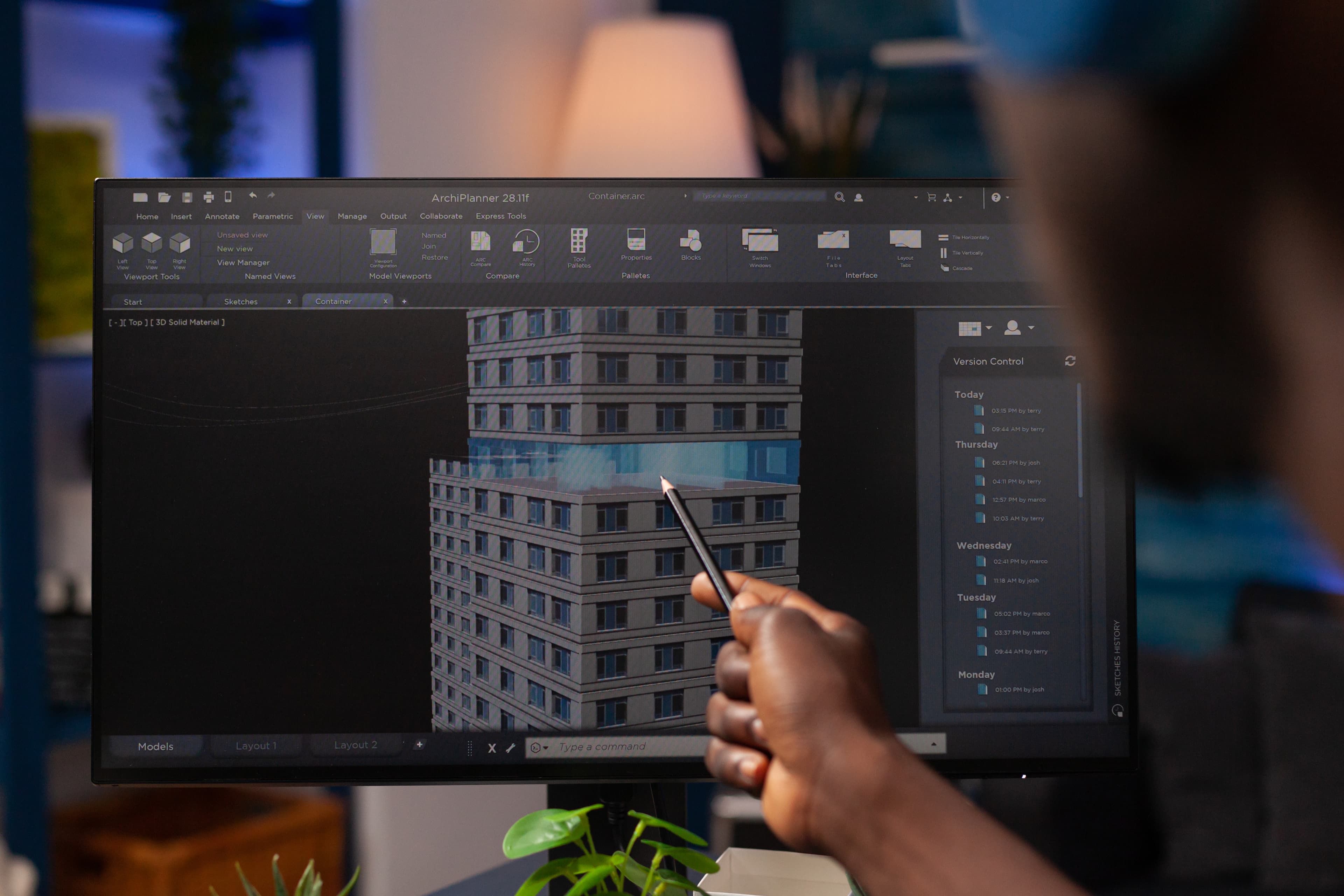
How AI Agents Are Replacing Manual BIM Coordination: Autonomous Clash Detection in 2026
traditional bim coordination has always been a bottleneck in construction projects. coordinators spend countless hours manually reviewing federated models, iden...
Auteur
BimEx Team
BIM Research Editor
Publié
12 juin 2026
12 juin 2026
Traditional BIM coordination has always been a bottleneck in construction projects. Coordinators spend countless hours manually reviewing federated models, identifying clashes, assigning resolution tasks, and re-checking that fixes actually work. For large-scale projects with hundreds of discipline models, this process can consume months of repetitive labor—and human error means critical conflicts still slip through to site. But 2026 marks a turning point: AI agents are now capable of autonomously detecting, categorizing, and even suggesting solutions for BIM clashes without constant human intervention. This shift is fundamentally changing how design teams approach coordination, dramatically reducing review cycles while improving outcome quality.
The Problem with Manual BIM Coordination
In conventional workflows, BIM coordinators receive individual discipline models—architectural, structural, mechanical, electrical, plumbing—and use clash detection software to identify intersections. The coordinator must then classify each clash by severity, determine which team owns the problem, document the issue in a coordination platform, track resolution, and verify the fix in a subsequent model iteration. For a typical commercial tower with 50+ MEP systems, a single coordination meeting might surface 300 to 500 new clashes. Teams spend 60-70% of their time simply categorizing and assigning these issues rather than solving them. The process is labor-intensive, error-prone, and creates massive coordination backlogs that delay design冻结.
Moreover, manual clash detection only catches geometric intersections. It cannot assess whether a clash represents a genuine construction problem, whether the competing systems could coexist with minor adjustment, or whether resolving one clash might create new conflicts elsewhere. This limited visibility means teams often chase low-priority issues while missing systemic coordination problems that emerge later during construction.
How AI Agents Automate BIM Coordination
AI-powered coordination agents work differently. Instead of simply identifying geometric overlaps, they apply machine learning models trained on thousands of resolved coordination issues to understand context. When an agent encounters a clash between a structural beam and an HVAC duct, it analyzes the surrounding geometry, system types, spatial constraints, and historical resolution patterns from similar projects to determine whether the clash is critical, ignorable, or resolvable through a standard approach.
The agent's classification engine draws from a trained taxonomy that maps clash types to recommended resolution pathways. A pipe intersecting a structural column might trigger different analysis paths depending on pipe diameter, column size, accessibility for future maintenance, and code-required clearances. The agent synthesizes these factors to assign a priority score and propose specific resolution strategies—suggesting a duct routing adjustment, a beam stub modification, or a maintenance access reconfiguration—based on what has worked on comparable past projects.
Crucially, AI coordination agents operate continuously rather than periodically. They monitor incoming model updates in real-time, automatically detecting new clashes the moment a designer uploads a revised file. This eliminates the traditional rhythm of weekly coordination meetings and instead creates an always-current coordination state where issues are identified and assigned within hours of model changes.
Leading AI Coordination Platforms in 2026
Several platforms have emerged as leaders in autonomous BIM coordination.\bAutodesk\b's BIM Coordination product now integrates its Assist AI layer, which automatically categorizes clashes and surfaces the highest-priority issues to coordinators while suppressing low-impact conflicts. The system learns from how users handle specific clash types and adjusts its filtering accordingly—over time, it becomes more accurate at predicting which issues genuinely require human attention.
\bBentley\b's \bSYNCHRO\b AI\b, part of its infrastructure construction platform, applies computer vision and rule-based reasoning to coordinate complex civil and infrastructure models. For rail and highway projects where coordination spans earthworks, drainage, utilities, and structures, SYNCHRO AI identifies not just geometric clashes but also constructability conflicts—flagging situations where equipment cannot access planned excavation areas or where drainage slopes violate grade constraints.
\bRevizto\b has expanded its AI capabilities to include intelligent issue tracking that automatically links clash detections to specific model elements and suggests responsible parties based on system ownership rules. The platform's natural language processing allows coordinators to ask questions like “show me all structural conflicts in Zone B3” and receive filtered, prioritized results instantly.
Beyond these established vendors, startups like\b Spacemaker\b (acquired by Autodesk) and\b Polycam\b's construction division are pushing further into generative coordination—using AI not just to detect problems but to propose design alternatives that resolve multiple conflicts simultaneously while optimizing for objectives like material usage, constructability, and energy performance.
Practical Workflow: How a Mid-Size Firm Adopted Autonomous Coordination
A mid-size mechanical contractor implementing a 12-story mixed-use development in late 2025 illustrates the practical impact. Their previous approach involved a dedicated coordination team of four engineers spending 30+ hours weekly on clash review and assignment. After deploying an AI coordination agent integrated with their existing Revit and Navisworks workflow, the team reduced coordination review time by 65% within three months.
The workflow operates as follows: each design discipline uploads model revisions to a common collaboration platform (BCF-compatible). The AI agent automatically processes incoming files overnight, running comprehensive clash detection across all discipline interfaces. By morning, the coordinator receives a prioritized dashboard showing 40 to 60 issues flagged for human review—down from the previous 150 to 200 manual identifications. The agent has already suppressed minor tolerance-based clashes and grouped related conflicts into single resolution packages. The coordinator reviews AI recommendations, approves or adjusts assignments, and distributes tasks to discipline leads via the platform's integrated issue tracking.
The contractor reported that coordination meeting time dropped from four hours to 90 minutes, design iterations decreased from six to three before construction documents were frozen, and field change orders related to coordination conflicts fell by 40% compared to a similar project completed the prior year without AI assistance.
The Limits and Future of Autonomous BIM Coordination
Autonomous coordination is powerful but not infallible. AI agents still struggle with context-dependent reasoning that requires deep project knowledge—for example, understanding that a seemingly minor clash in a particular building zone is actually critical because that area will serve as a temporary construction hoarding space during later phases. They also cannot fully account for client-specific standards, unusual procurement constraints, or relationships between project stakeholders that influence coordination priorities.
The trajectory for 2027 and beyond points toward self-healing models—AI systems that not only detect coordination conflicts but can apply parametric adjustments directly within BIM environments to automatically resolve certain clash types. Imagine a system that, upon detecting a pipe-beam conflict, automatically adjusts pipe routing based on predefined constraints, tests the modification against downstream systems, and presents the corrected model to engineers for approval. This level of automation will further compress coordination timelines and free human expertise to focus on high-value design optimization rather than conflict resolution.
Another emerging frontier is multi-model coordination across the project lifecycle—connecting AI coordination agents with fabrication automation, construction simulation, and facility management systems. When a clash is resolved in design, the AI will propagate that decision through fabrication models, installation sequencing, and digital twin asset data, ensuring coordination decisions translate consistently across downstream workflows.
Conclusion
AI-driven autonomous BIM coordination represents one of the most tangible and immediately valuable applications of artificial intelligence in construction technology. By automating the tedious, repetitive aspects of clash detection and resolution, these systems enable coordination teams to focus on complex problem-solving, design optimization, and project leadership. For firms still relying on manual coordination processes, the efficiency gains and quality improvements demonstrated in 2026 projects make adoption not just attractive but necessary for remaining competitive. The future of BIM coordination is not about replacing human expertise—it is about amplifying it through intelligent automation.